
Practical Karate For the Whole Family
Train together. Learn to protect. Grow into leadership.
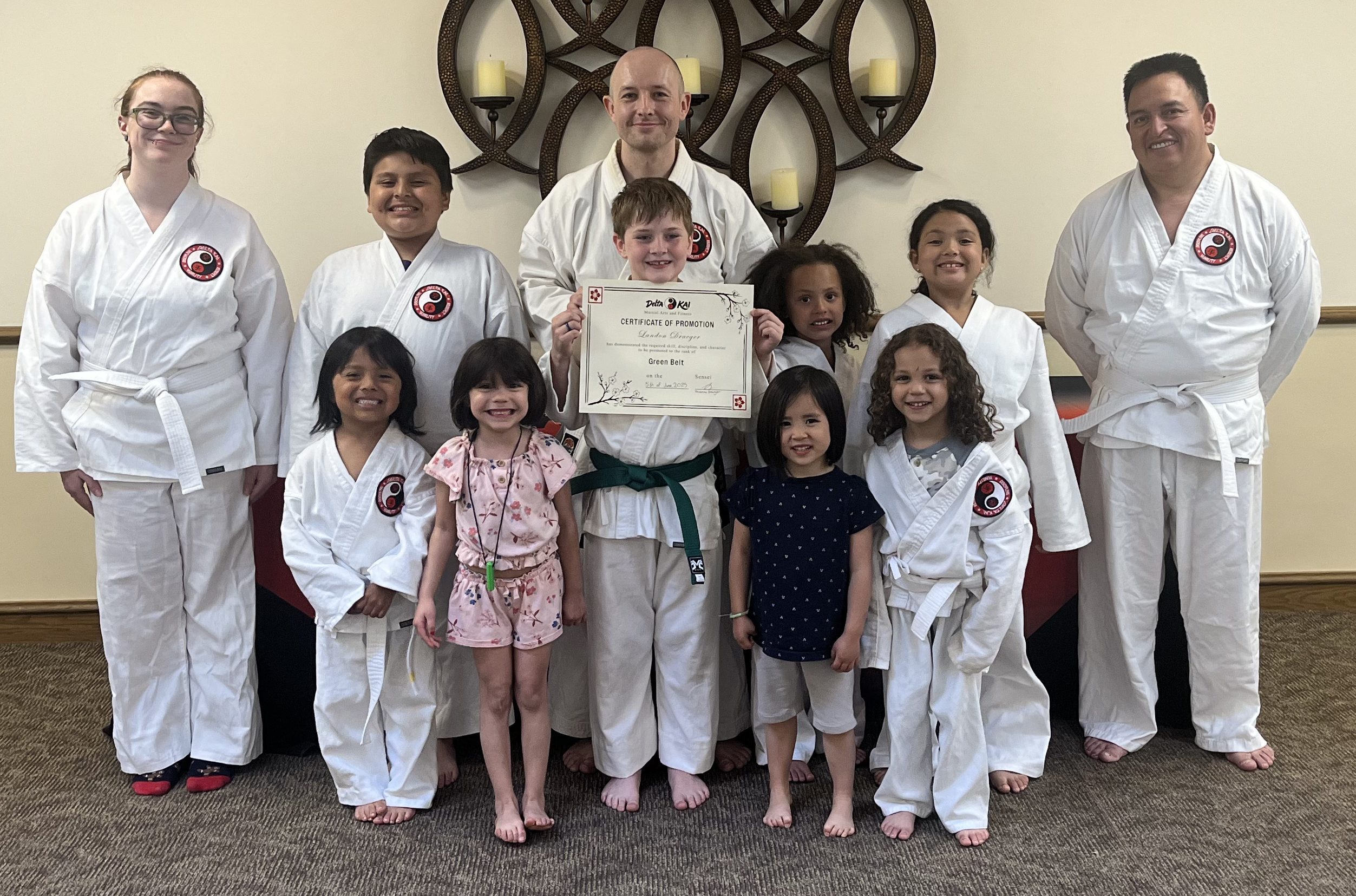
Rising Warriors is a family class where youth, teens, and adults train side by side while progressing at their own level. Parents are encouraged to step onto the floor with their children—not only watch from the side.
- White Belt Foundations – Movement, awareness, limb control, containment, and practical responses to common grabs.
- Technique Application – Kata becomes a self-defense manual for close-range and medium-range situations.
- Black Belt Leadership – Pressure-test techniques, mentor students, and help develop and refine curriculum.
Ages 8+ Family Class
Families share the experience while progressing individually.
Grappling from White Belt
Clinch work, limb control and containment begin immediately.
Mixed-Rank Mentorship
Experienced students grow by helping newer students.
Earned Progress
Belts reflect lasting growth, not rushed promotion.
A PLACE FOR FAMILIES TO TRAIN TOGETHER
More Than Watching from the Sidelines
Parents are encouraged to train alongside their children. Training together gives your family an activity to do together and will help forge lasting bonds. No previous karate experience is required to begin.
- Connection: work toward meaningful goals together.
- Consistency: reinforce class lessons through shared understanding.
- Example: let children see adults learn, struggle, and keep going.
- Individual growth: advance at the pace appropriate for your own training.
PRACTICAL SELF-DEFENSE FROM THE BEGINNING
Learn to Control, Not Force
Starting at white belt, students learn principles drawn from grappling and containment: position, balance, leverage, limb control, joint-control concepts, wrist-grab escapes, and responses to bear hugs and other common holds.
The purpose is not to collect random techniques. Students learn why a movement works, how to adapt it, and how to create safer options when someone is already within grabbing distance..
- Leverage: use alignment and body mechanics instead of depending only on strength.
- Containment: control limbs and movement when simply moving away is not possible.
- Adaptability: apply principles when the situation does not match a memorized drill.
Naihanchi Series Clinch-Distance Fighting
Naihanchi helps students study posture, close-range striking, elbows, controls, off-balancing, throws, and sweeps when space is limited and contact has already been made.
Pinan Series Manages Distance
Pinan helps students with traps, limb-clearing, joint locks, throws, and grappling that transition into clinch distance fighting.
Kata is not only a performance to memorize. It becomes the student’s reference manual for practical self-defense.
EVERY STUDENT HAS A ROLE
A Mixed-Rank Class That Learns Together
Parents are encouraged to train alongside their children. Training together gives your family an activity to do together and will help forge lasting bonds. No previous karate experience is required to begin.
New Students Learn From Example
Beginners see what progress looks like and receive support from people who remember being new.
Experienced Students Learn by Helping
Explaining, demonstrating, and encouraging others develops communication, patience, and leadership.
Black Belts Help Shape the Dojo
Advanced students test ideas, mentor others, and contribute to curriculum development and improvement.
A BLACK BELT THAT MEANS SOMETHING
A 6–9 Year Journey into Leadership
Delta Kai’s curriculum is intentionally broad and deep, so black belt typically takes 6–9 years. Students must also be at least 14 before earning the rank.
These standards allow technical skill, judgment, maturity, and responsibility to develop together. Black belt marks readiness for deeper work—not the end of learning.
- Technical Growth – Karate fundamentals, kata, application, control, and fitness develop together.
- Consistent Practice – Students show that skills can be performed with increasing understanding and reliability.
- Character in Action – Youth work on a behavior goal before earning their third stripe and moving toward testing.
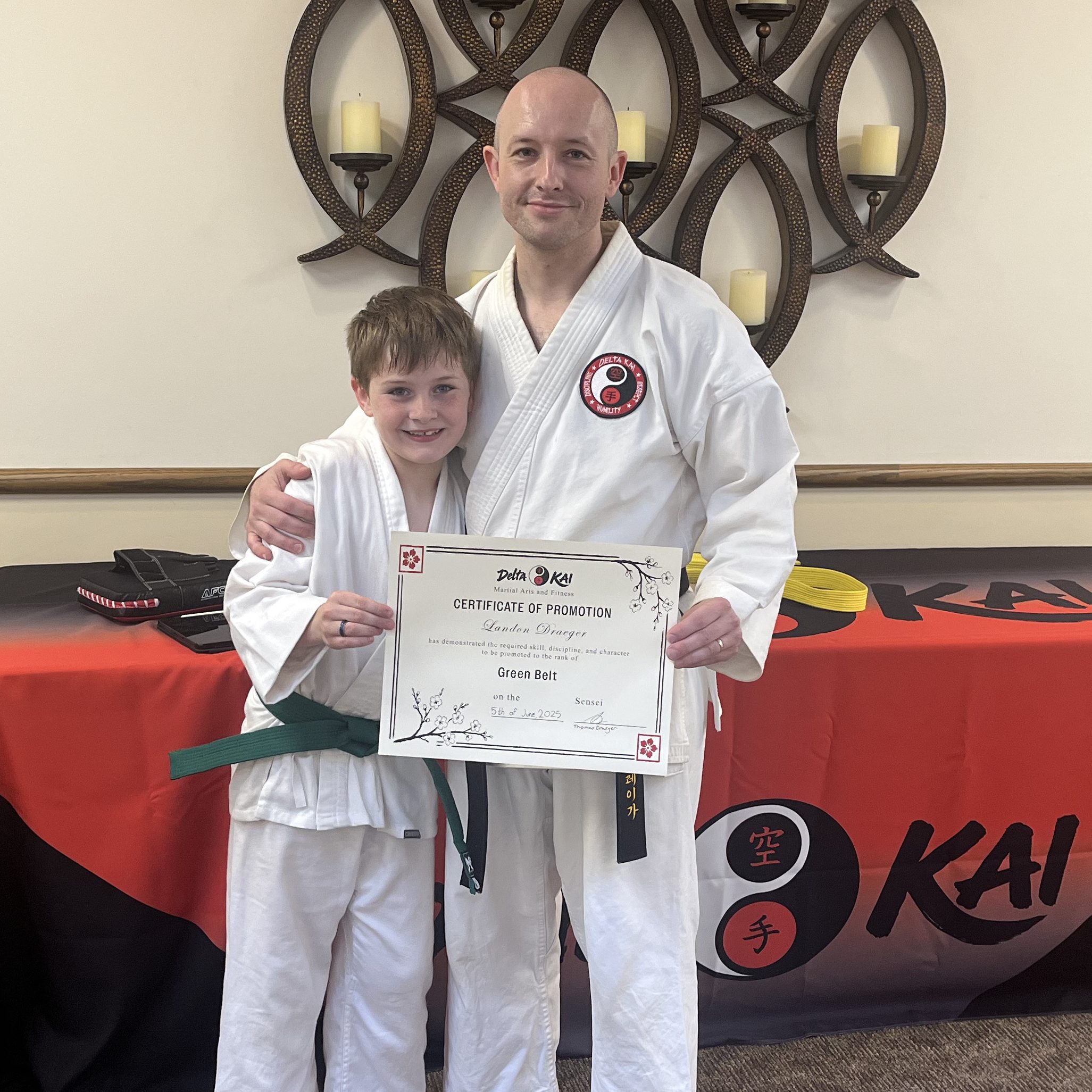
Pressure test techniques
Following directions and responding with self-control.
Analyze the curriculum
Balance, coordination, posture, and purposeful movement.
Help develop curriculum
Trying hard things without learning aggression.
Start Your Own Dojo
Achieving
CONTINUING FROM LITTLE STARS
A Natural Next Step at Age 8
Little Stars students can transition into Rising Warriors at age 8, bringing their foundations in listening, movement, confidence, behavior, and personal safety into a deeper family-training environment.
RISING WARRIORS · AGES 8+
Step onto the Floor Together
Whether your child is ready for the next step or your family wants a meaningful activity to share, Rising Warriors offers practical karate, earned progress, and a place to grow together.

